
Loyalty is no longer won at sign-up. It's won, or lost, the moment a customer walks in your store or opens your app. Shoppers now make decisions online, increasingly with AI, before they ever reach the store, so the retailers winning are those whose store and digital systems share a single, continuously updated view of the customer.
The Loyalty Reckoning has Reached the Store Floor
In 2026, retailers face a hard truth: enrollment no longer equals loyalty. 77% of consumers say they pull their loyalty from brands faster than they did three years ago, and roughly 74% of new loyalty members go quiet within two months. Just having a points program no longer sets you apart. Leveraging the data to quickly recognize and reward customers does.
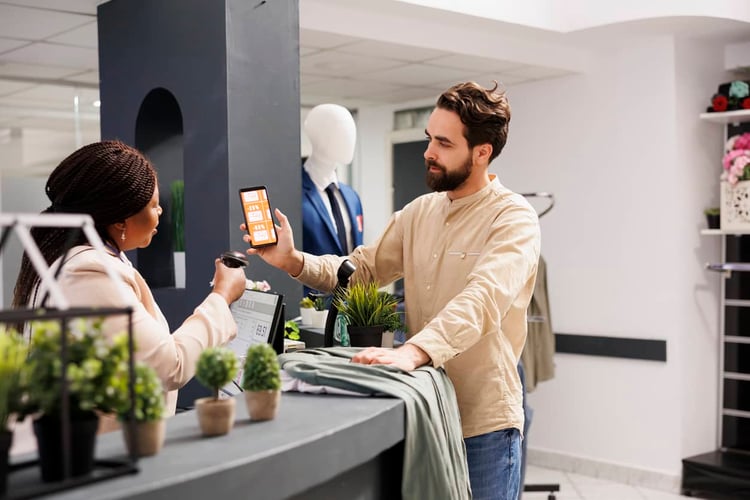
At the same time, quality customer experiences keep slipping. Forrester's US CX Index fell to a record low for the fourth straight year. Customers do not stay because they are enrolled. They stay because they feel known, and that happens in the store, where the associate either recognizes them or treats them like a stranger.
The implication is clear: loyalty has to live where the customer actually transacts, at the point of sale. A meaningful connection of loyalty at the POS ensures associates see a customer’s full profile in real-time, not just points. This means offers can be automatically presented, and even more importantly, associates have the insight to execute targeted cross-sell and upsell in the moment of the transaction.
What Integrating Loyalty with POS Actually Does
The function is simple, and the architecture is what makes it possible: a composable platform lets every part of your brand recognize the same customer and act on it in real time.
When loyalty aligns with a unified commerce platform instead of being relegated to a siloed system, three things become true at the point of sale:
- The customer earns rewards everywhere and can leverage those rewards seamlessly across your brand
- The associate knows who is in front of them, what they have bought, and what they are likely to want next
- The marketer finally works from one profile per customer instead of stitching together fragments from multiple systems
The payoff shows up in spending. Omnichannel customers spend 16% more per order and have a 30% higher lifetime value than single-channel shoppers. Customers who are recognized everywhere spend more and stay longer.

A Day in the Life: What Seamless Commerce Looks Like:
Maya browses a retailer's app on the train home, adds a wool coat to her cart, but doesn't check out. That evening she receives a reminder that the coat is in stock at the store near her office, with a member-only offer attached.
The next day she walks in, and the associate, Devin, greets her with a tablet that already shows her cart, her size from past purchases and her loyalty status. Immediately the store knows her and what she is looking for. He pulls the coat, notices she bought matching trousers last season, and suggests a scarf that completes the look. Maya adds it to her order.
At checkout, her member offer applies automatically. Her points update before she's out the door, and the receipt lands in the same app she browsed on the train. No re-scanning a loyalty card. No “online prices are different in store.” No starting over, just one smooth omnichannel transaction.

Behind that two-minute interaction, loyalty, POS, inventory, and her purchase history were all reading from the same live profile. To Maya, that translated as simply being known and rewarded. That recognition is what brings her back, and it's the difference between a loyalty program she ignores and one that influences her use of a brand.
Loyalty isn't earned in the program. It's earned in the store. The key is to ensure your associates already know your most valuable customers, because recognition turns a one-time buyer into a loyal customer.
Where eCommerce Meets the Store
Maya's coat started online and finished in store, and the reward followed her through her shopping journey. That's where most retailers stumble, because their eCommerce and store systems were never built to share a customer.
When they are connected, the store stops competing with the website and instead can focus on completing the transaction for the brand. The online cart drives a store visit. Buy Online, Pick Up In Store turns a fulfillment into a targeted engagement opportunity, as shoppers who pick up in store frequently add to the basket while they're there. When an associate sees the digital history and the website sees what happened in the store, customer engagement becomes seamless and a brand conversation isn’t forced to reset when the channel changes.
Bottom line: Connect e-commerce and the store and every interaction, online or in the store, feeds the same customer profile to compound loyalty engagement.
How AI Raises the Stakes Inside the Store
How you deploy AI in your customer experience will have a major impact on whether shoppers choose your brand: how AI personalizes their offers and how effectively AI agents direct the best place for your customer to buy based on their needs.
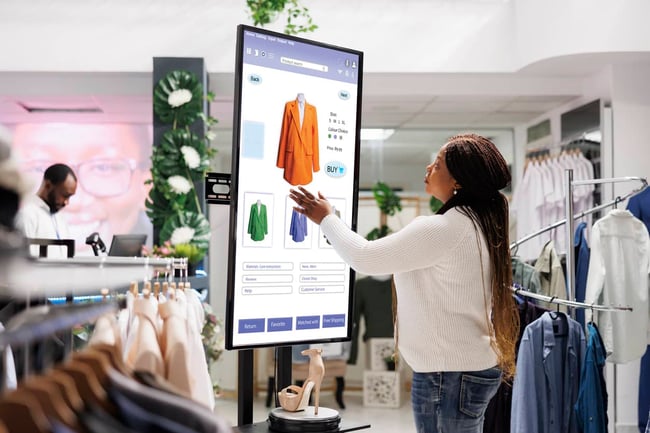
AI-Driven Personalization Depends Heavily on Store Data
Personalization has moved from broad segments to the individual, driven by real-time behavioral and zero-party data. But an AI-generated offer is worthless if it isn’t targeted to where and how your customer wants to shop next. When the associate's POS and the loyalty engine are informed with the same data, the “next best offer” AI surfaces online can be the same one that applies when Maya checks out in store. Without this data symmetry, the customer is often promised something the store can't deliver, and the recognition AI created collapses at checkout. Forrester attributes part of retail's CX decline to exactly this: disappointing AI implementations that never reached the frontline.
AI Shopping Agents can Route Demand to your Store, but Are You Ready?
Agentic AI is starting to shop on the customer's behalf. Morgan Stanley projects that nearly half of online shoppers will use AI shopping agents by 2030. When an agent places an order, it needs a clean, API-accessible view of price, promotions, loyalty status and local inventory to decide what to buy and where to fulfill. Your store is one of those fulfillment points. If store inventory and loyalty data are locked in legacy systems, the agent can't see your shelves and routes the sale elsewhere. If they're exposed through a unified commerce platform, the agent can reserve the item, apply the member reward and send the customer in to collect, turning an autonomous transaction into a store visit and a powerful opportunity to deepen the relationship.
Bottom line: When AI is personalizing an offer or placing an order autonomously, it only acts on your store if the loyalty, inventory and promotions data are unified and accessible in real time.
Why Composable Architecture is the Common Thread
Every capability above depends on the same foundation: store and online systems that share one view of the customer. That's what a composable, cloud-native platform delivers.
- Microservices-based flexibility: Loyalty, POS and inventory capabilities can continuously evolve independently without long cross-system test cycles
- API-first integration: Offers, points and inventory are accessible to any channel, associate or AI agent
- Real-time data: The customer profile your associate sees is the same profile the website and the AI act upon
- Iterative, continuous delivery deployments: Retailers are free to modernize their store without a high-risk rip-and-replace
Retail transformation today is not about isolated system upgrades. It means giving the store the highest level of real-time intelligence and enabling it to be shared across the enterprise.
Scale with Intelligence and Confidence
With a truly modern architecture, you no longer have a waterfall approach to system changes or modernization. Instead, composability allows you to identify a high-value use case and rapidly test how new features and unified loyalty can transform behaviors in the store. Lean into the platform to quickly determine how to test features that will enable you to measure recognition, redemption, and incremental basket size, and then scale from evidence with confidence.
Explore OneView's Fast-start Programs and prove ROI before your enterprise rollout. Start with proof. Scale with confidence.
See how a global luxury brand puts one customer view to work across its stores and digital channels in Connected Retail at Molton Brown.
Frequently Asked Questions
What is loyalty-POS integration?
It's creating real-time, two-way integration between your loyalty program and the point of sale through a unified commerce platform, so customers can seamlessly earn and redeem rewards in the same transaction while associates see a complete customer profile at every point in the engagement journey ensuring a personalized experience.
Why does customer loyalty matter more today?
Traditional brand loyalty is eroding. Most consumers switch brands faster than before, and many new members disengage within months. Recognition at the point of purchase, especially in the store, is now the differentiator that improves customer retention and loyalty.
How does AI affect loyalty in the store?
AI personalizes offers and, increasingly, places orders on the customer's behalf. Both work only if the store's loyalty, inventory and POS data are unified and accessible in real time. This information is vital to enable an AI offer to be honored at checkout and an AI agent to route orders to your store.
What role does composable commerce play in enhancing customer loyalty?
Composable, API-first architecture is what lets loyalty, POS, Inventory, eCommerce and AI agents and tools all read from one continuously updated customer profile. That consistent view of data is the prerequisite for customer recognition across every channel.